Welcome: Laizhou Machinery Group



When Australian dealers import off road caravans, the caravan itself is only part of the purchasing decision.
Dealers also need to consider what happens six months, one year or several years after delivery.
If a relatively inexpensive component fails and the replacement must be shipped individually from overseas, a minor repair can become an unnecessary delay for both the dealer and customer.
For this reason, spare-parts planning should ideally begin with the first caravan order—not after the first warranty claim.
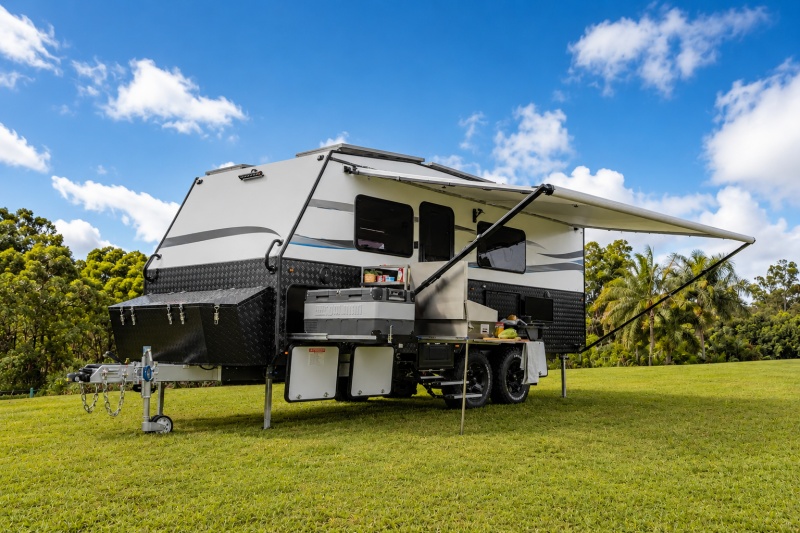
A dealer should know which components are:
Standard locally available parts
Manufacturer-specific parts
Model-specific components
Wear items
Electrical components
Cosmetic replacement parts
This information helps determine which parts should be stocked locally.
The objective is not to purchase large quantities of every component. It is to identify a practical group of parts that could reduce future service delays.
Some components are more likely to require replacement because of normal use, vibration or long-distance travel.
Depending on the caravan configuration, dealers may consider keeping selected:
Bushes
Bearings
Seals
Fasteners
Hinges
Latches
Handles
Drawer catches
Cabinet hardware
Small parts usually require little storage space but can be extremely useful when a caravan needs a quick repair.
Off road caravans can operate in demanding environments, so suspension serviceability deserves particular attention.
Depending on the suspension system supplied, dealers should discuss the availability of:
Suspension bushes
Shock absorbers
Bearings
Mounting hardware
Selected suspension components
The exact spare-parts package should match the suspension configuration rather than using a generic list for every caravan.
Running gear is another important area.
Dealers should identify the specifications and availability of components associated with:
Wheel bearings
Brake components
Wheel studs
Wheel nuts
Related hardware
Where compatible parts are readily available in Australia, local sourcing may be more efficient.
Where a component is unusual or manufacturer-specific, stocking replacements can make more sense.
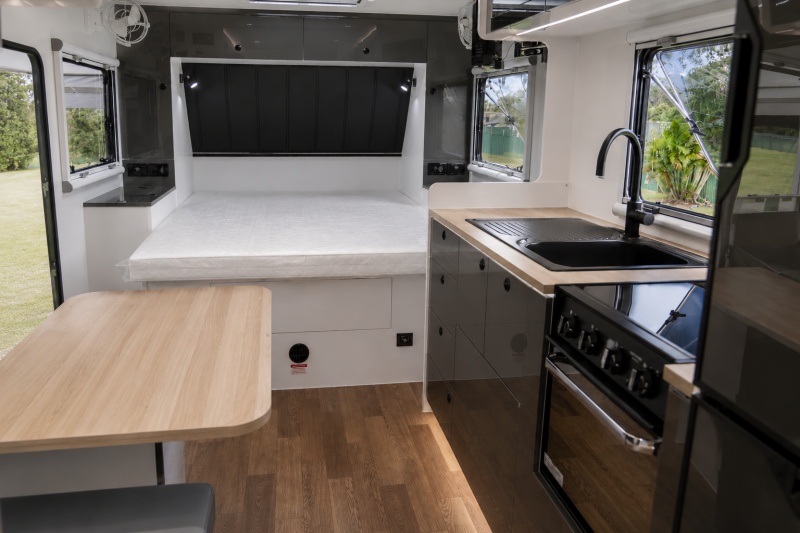
Modern off road caravans contain increasingly sophisticated electrical systems.
Depending on the specification, the caravan may include:
Lithium batteries
Solar controllers
Inverters
Battery management systems
Control panels
LED lighting
Water-pump controls
Switches
Sensors
It is rarely necessary to keep a complete replacement electrical system in stock.
Instead, dealers should identify components that are difficult to obtain locally or are specific to the caravan configuration.
Small plumbing components can cause significant inconvenience if replacements are unavailable.
Useful service parts may include:
Connectors
Fittings
Valves
Pump-related components
Seals
Selected hoses
Tank fittings
The dealer should also understand which components use standard specifications that can be sourced locally.
Exterior components deserve special attention because some may be model-specific.
Examples include:
Door handles
Locks
Window catches
Window stays
Compartment locks
Hinges
Rubber seals
These parts are relatively small, making them practical additions to a dealer spare-parts package.
Long-distance caravan travel creates continuous vibration.
Interior hardware may eventually require adjustment or replacement.
Dealers may therefore consider stocking selected:
Cabinet hinges
Drawer slides
Drawer catches
Handles
Door latches
Furniture hardware
A small inventory of these parts can help solve minor customer problems quickly.
Depending on the caravan specification, dealers may also discuss replacements for:
Tail lights
Marker lights
Interior LED fittings
Exterior lights
Switches
Electrical connectors
Again, the first question should be whether an equivalent component is easily available locally.
There is little benefit in importing something that can be purchased conveniently in Australia.
Not every spare part relates to mechanical failure.
Accidental damage can affect:
Exterior trims
Decorative panels
Graphics
Compartment doors
Interior finishes
For OEM brands, dealers should keep records of materials, colours and component specifications so matching replacements can be produced later if required.
Not necessarily.
A better strategy is to divide parts into three categories.
Small, inexpensive and frequently required items.
Standard components that are readily available in Australia.
Large, expensive or rarely replaced components.
This approach helps control inventory costs while maintaining practical service capability.
A dealer selling one demonstration caravan has very different requirements from a distributor operating hundreds of units.
As the installed customer base increases, dealers can analyse:
Which parts are used most frequently
Which failures take longest to resolve
Which parts are difficult to source locally
Which components should be included in future shipments
The spare-parts inventory can therefore develop together with the business.
Dealers should consider requesting information such as:
Component name
Specification
Part number where applicable
Quantity used per caravan
Recommended spare quantity
Whether the component can be sourced locally
This is particularly useful for private-label caravan businesses planning repeat orders.
For an OEM caravan project, after-sales support should be considered during product development.
Where practical, using components that can be serviced or replaced in the destination market can make long-term ownership easier.
The conversation between dealer and manufacturer should therefore include not only:
"How much does the caravan cost?"
but also:
"How will we support these caravans after they are sold?"
That is an important difference between buying a product and building a sustainable caravan business.
Dealers and importers can explore the complete LZM Off Road Caravan range:
https://www.lgloader.com/list/54-chinese-china-off-road-caravan.html
The LZM 21ft Family Off Road Caravan can be customized for different international markets, including layouts, electrical systems, equipment packages and OEM branding.
For dealer and distributor projects, spare-parts requirements can also be discussed according to the final caravan configuration and order requirements.
Product details:
https://www.lgloader.com/products/285-21ft-Off-Road-Caravan-For-Sale.html
For Australian caravan dealers, spare-parts planning should begin before the first shipment leaves the factory.
The best strategy is not to stock every possible component. Dealers should identify which parts are frequently required, which can be sourced locally, and which are difficult to obtain outside the original manufacturer.
A carefully planned spare-parts package can reduce repair delays, improve after-sales service and make an imported caravan business easier to scale.