Welcome: Laizhou Machinery Group


For an established Australian caravan dealer, selling another manufacturer's standard model is not the only way to expand the business.
Some dealers want to develop caravans under their own brand, select specifications for their target customers and create a product range that is different from competing dealerships.
OEM and private label manufacturing can provide a practical route to developing these products without investing in a complete caravan production facility.
The key question is not simply whether a factory can put a dealer's logo on a caravan.
A serious OEM project involves deciding which parts of the product should remain standardized and which specifications should be customized for the dealer's market.
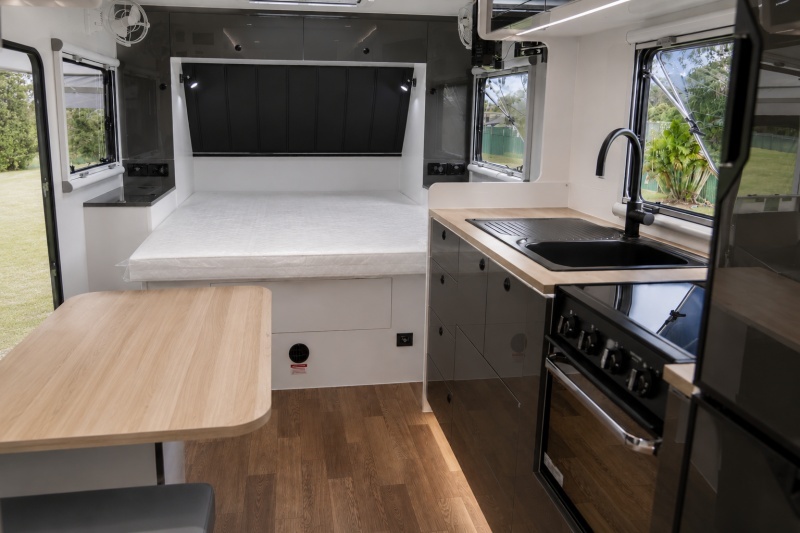
Private label caravan manufacturing can involve several levels of customization.
A dealer may require changes to:
Exterior branding
Interior colour schemes
Floor plans
Furniture and storage
Battery capacity
Solar systems
Appliances
Suspension specifications
Optional equipment
The objective is to create a recognizable product range rather than simply purchasing a generic caravan and changing its badge.
Layout is one of the most visible differences between caravan models.
Australian dealers may target different customer groups, including:
Couples
Families
Long-distance travellers
Off-grid travellers
Adventure customers
Depending on the target market, an OEM project may require changes to sleeping arrangements, seating, kitchen space, storage or bathroom configuration.
A dealer should therefore define the target customer before finalizing the layout.
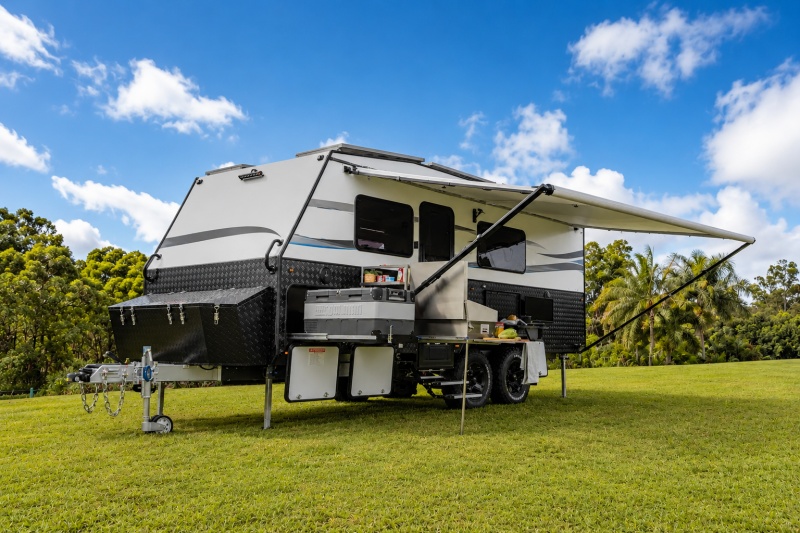
Electrical capacity is increasingly important for off-grid caravan customers.
Different product positions may require different combinations of:
Lithium battery capacity
Solar panels
Inverters
Chargers
Electrical monitoring
Power outlets
Instead of using one configuration for every model, dealers can discuss different electrical packages for different market segments.
A caravan marketed for off road or remote travel requires more than an adventurous appearance.
Dealers should discuss technical requirements such as:
Suspension configuration
Chassis construction
Ground clearance
Wheels and tyres
Load requirements
These specifications should be determined according to the intended application and complete caravan configuration.
For private label projects, exterior design can become an important part of brand identity.
Possible requirements may include:
Dealer logo
Brand graphics
Exterior colour
Decals
Model identification
Selected exterior accessories
Consistent exterior design across several models can help dealers establish a recognizable caravan range.
Customization does not mean every caravan should be completely different.
For dealers, excessive customization can make:
Production more complicated
Spare parts management harder
Quality consistency more difficult
Repeat orders less efficient
A better approach is often to establish several standardized dealer configurations.
For example:
Model A: Compact adventure configuration
Model B: Family touring configuration
Model C: Premium off-grid configuration
Each configuration can then be reproduced for future orders.
A dealer is responsible for customers after the caravan has been sold.
Therefore, spare parts planning should begin before the first production order.
Dealers should discuss:
Frequently replaced components
Component specifications
Replacement availability
Parts identification
Technical information
This is especially important when building a private label brand intended for long-term sales.
Providing clear information helps the manufacturer evaluate a project more efficiently.
Useful information includes:
Target customer group
Preferred caravan size
Required layout
Expected equipment level
Battery and solar requirements
Suspension requirements
Branding requirements
Estimated purchasing volume
The more clearly the market position is defined, the easier it is to develop an appropriate specification.
For many dealer projects, modifying an existing platform is more practical than developing a completely new caravan from zero.
An existing model can provide a starting point for discussing:
Layout
Equipment
Electrical systems
Interior finish
Branding
This can reduce product-development complexity while still allowing meaningful differentiation.
LZM works with caravan dealers, importers and business customers requiring OEM and customized caravan manufacturing.
Our off road caravan range can provide a starting point for businesses evaluating different models and configurations.
For dealers looking for a larger family-oriented platform, the LZM 21ft model can be discussed with different interior and equipment configurations.
Customization can include:
Interior arrangement
Battery capacity
Solar configuration
Storage
Equipment packages
Exterior branding
Australian dealers interested in developing a private label caravan range can begin by providing:
Target customer
Required size
Preferred layout
Key equipment
Expected purchasing quantity
LZM can then discuss suitable existing models and possible customization options based on the project requirements.
Building a private label off road caravan brand requires more than choosing a factory and adding a logo.
Product positioning, layout, electrical systems, suspension, branding, repeat production and spare parts all need to be considered together.
For Australian dealers, the right OEM manufacturing relationship can provide a practical way to develop differentiated caravan products while keeping production focused and repeatable.