Welcome: Laizhou Machinery Group



A hurricane or severe storm can generate thousands of insurance claims within a very short period.
For insurance companies, the challenge is not only processing those claims. They also need physical locations where customers can speak with representatives, submit documents and receive assistance.
Existing branch offices may be too small, damaged or simply too far away from the affected communities.
Instead of waiting for a temporary building to be constructed, an expandable event trailer can be deployed as a large mobile customer service facility.
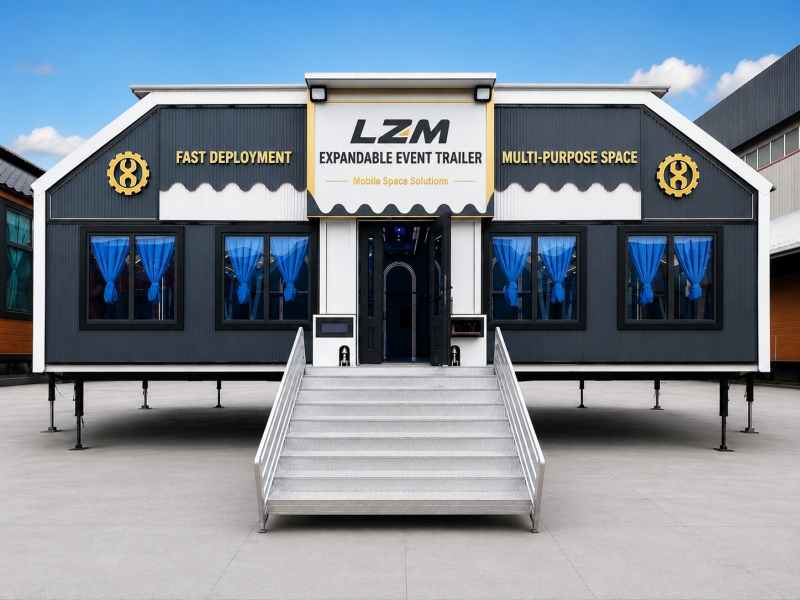
After severe weather, insurance companies may suddenly need additional service capacity.
Customers may arrive with questions about:
Property damage
Vehicle damage
Claim documentation
Inspection procedures
Temporary accommodation
Payment processes
Serving these customers from a small conventional trailer can quickly become difficult.
A large expandable unit creates considerably more usable indoor floor area after deployment.
This makes it possible to separate different customer and staff functions within one mobile facility.
Instead of creating one large open room, the interior can be divided according to the claims workflow.
The entrance area can be used for:
Registration
Queue management
Initial information
Document checking
Customers can then be directed to the appropriate service area.
Insurance claims often involve financial and personal information.
Partitions can create individual consultation areas where customers can speak privately with claims representatives.
Another section can provide working space for:
Claims adjusters
Administrative staff
Field assessment teams
Customer service personnel
Electrical outlets, lighting and communication equipment interfaces can be planned according to the operating requirements.
Houston and the wider Gulf Coast face recurring exposure to hurricanes, flooding and severe storms.
Following a major weather event, demand for insurance services can increase rapidly across different communities.
A mobile claims facility gives an insurance company another option:
Deploy the facility where customer demand is highest, operate it during the recovery period, and relocate it when the local requirement decreases.
The same unit can later support another region or another catastrophe response project.
A catastrophe claims center may need to serve many customers during the same day.
The interior can therefore be planned around:
Waiting capacity
Number of service desks
Staff workstations
Private consultation rooms
Document processing areas
For larger projects, multiple expandable trailers can also be considered when additional floor space is required.
The objective is not simply to provide shelter.
It is to create an organized temporary business environment capable of handling a high volume of customer interactions.
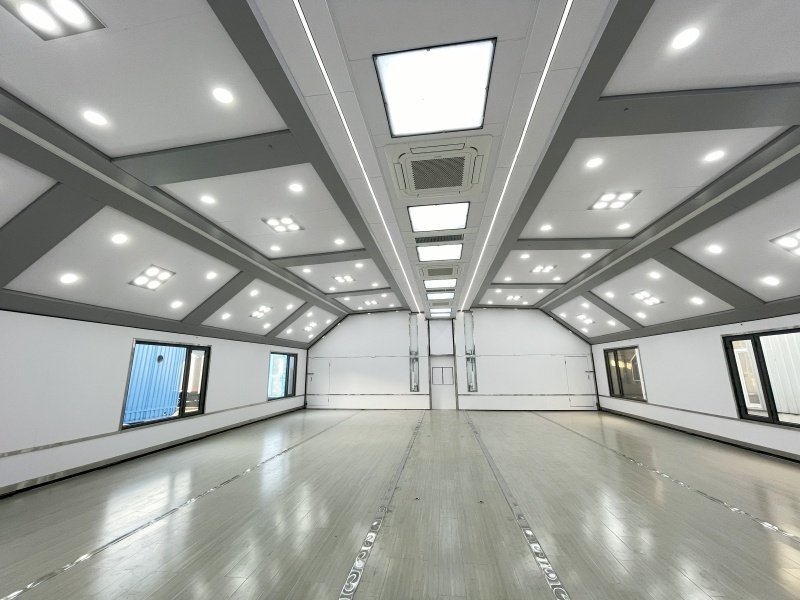
A temporary claims center may operate for weeks or months after a disaster.
In Houston's hot climate, air conditioning becomes an essential part of the facility rather than an optional feature.
Depending on the project, the trailer can also incorporate:
Insulation
Interior lighting
Electrical distribution
Emergency exits
Reception counters
Screens
Furniture layouts
The configuration should be determined before production according to the expected number of customers and staff.
Insurance catastrophe response is unpredictable.
A company may need additional space in Texas this year and another state later.
This is where mobility creates a different business model.
The facility can potentially support:
Hurricane response → Flood recovery → Regional claims campaigns → Temporary branch expansion
Rather than investing in a temporary structure for only one location, the company retains a mobile asset that can be redeployed.
The same concept may also be relevant to:
Claims management contractors
Disaster recovery companies
Government assistance programs
Utility customer service teams
Financial service providers
The interior configuration can change according to the organization and service process.
Before developing the layout, several practical questions should be answered:
How many customers are expected each day?
How many staff members will work inside?
Are private consultation rooms required?
How many service counters are needed?
What electrical equipment will be installed?
Will the unit move between different states?
Is the complete trailer required, or only the expandable body?
These answers help determine the appropriate trailer size and interior configuration.
After a major disaster, customers need more than a telephone number or website.
Some situations still require face-to-face communication, document handling and professional assistance.
An expandable event trailer can transform from transport dimensions into a large temporary indoor facility, giving insurance companies a flexible way to bring claims services closer to affected communities.
LZM can customize the expandable structure and interior configuration according to the required customer-service workflow.
See the expandable platform that can be adapted for mobile service projects: