Welcome: Laizhou Machinery Group



A new vehicle can sit quietly in a showroom waiting for customers to notice it.
Or its arrival can become an event.
For automotive dealers and vehicle brands, a new model launch is an opportunity to invite existing customers, attract new prospects and create an experience around the vehicle before the first test drive even begins.
But dealership showrooms are designed primarily for everyday sales operations.
When 100 or 200 invited guests arrive for a special launch, space can quickly become a problem.
An expandable event trailer introduces another possibility: create a dedicated launch and hospitality environment outside the permanent showroom and reuse it for future campaigns.
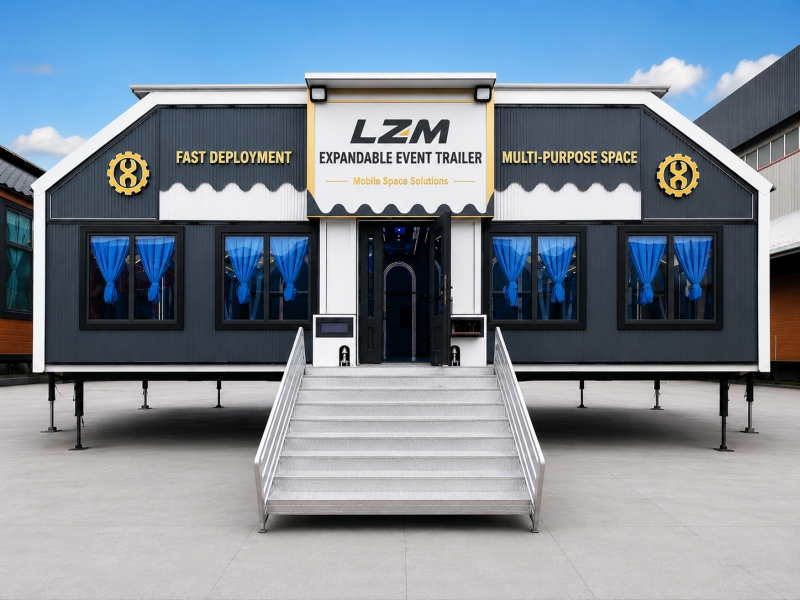
A conventional showroom has a job to do every day.
Sales consultants meet customers. Vehicles need to remain on display. Deliveries continue. Service departments operate.
Transforming the entire dealership into an event venue for every product launch can interfere with normal business.
A separate expandable space allows the launch event to operate alongside the dealership.
The permanent showroom continues working.
The mobile facility handles the special event.
The customer experience can begin at the entrance.
Instead of immediately walking toward a row of vehicles, invited guests could enter a branded reception environment with:
Registration desk
Welcome area
Digital displays
Brand graphics
Lounge seating
Refreshment area
This first zone sets the atmosphere before the new vehicle is introduced.
For premium automotive brands, that atmosphere can be particularly important.
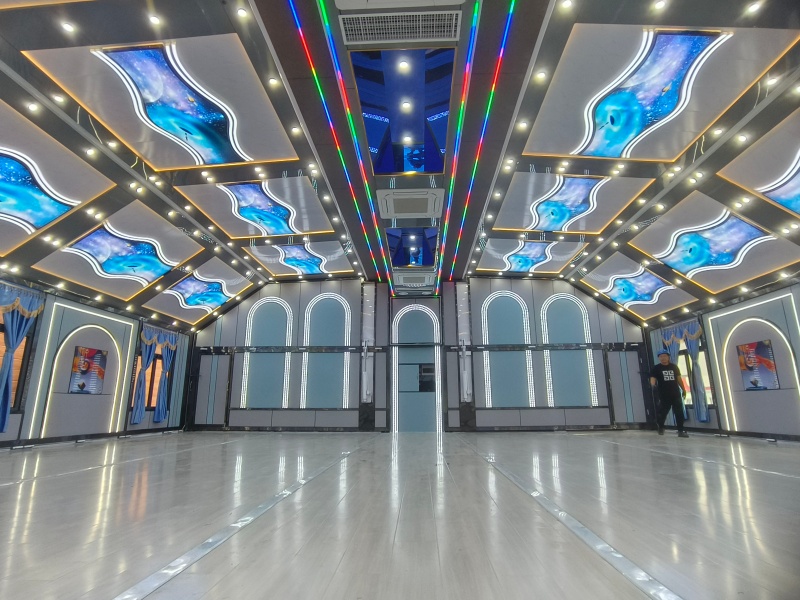
A vehicle launch is partly about information and partly about theatre.
Inside the expandable space, a presentation zone can support:
New-model introduction
Large-screen presentations
Product videos
Lighting effects
Sound systems
Sales presentations
Depending on the project layout and vehicle access requirements, the trailer can function as the hospitality and presentation environment while the actual vehicle reveal takes place immediately outside.
Guests then move naturally from the presentation to the car.
This creates a very different customer journey from a conventional showroom visit.
A possible event flow is:
Welcome → Brand Presentation → Vehicle Reveal → Product Consultation → Test Drive → VIP Lounge
Each stage has a specific purpose.
The trailer becomes the indoor hub connecting them.
For dealerships running scheduled test-drive events, customers can return to the lounge afterward to discuss:
Vehicle specifications
Finance options
Trim levels
Accessories
Delivery schedules
That turns the event space into part of the sales process rather than simply decoration.
Los Angeles has a strong relationship with automotive culture.
Luxury vehicles, electric vehicles, performance cars and lifestyle brands all compete for customer attention.
For dealerships, simply placing a new model in the showroom may not create enough differentiation.
Launch events can be organized at:
Dealerships
Shopping destinations
Private venues
Corporate events
Motorsport-related activities
Lifestyle events
A relocatable facility allows the same branded environment to appear at different campaign locations.
A permanent showroom is tied to its location.
A mobile automotive lounge can follow the marketing calendar.
For example:
SUV Launch → EV Campaign → Performance Model Event → Customer Appreciation Weekend → Regional Test-Drive Tour
Interior graphics and digital content can change with each campaign.
The primary expandable structure remains reusable.
This is particularly relevant to dealer groups operating multiple locations.
Instead of each dealership developing a separate temporary event environment, one mobile asset could potentially travel between branches.
Not every automotive event is designed for a large public audience.
Luxury dealers may organize smaller private events for:
Existing owners
Fleet customers
Corporate buyers
Influencers
Business partners
High-value prospects
In this case, the interior can emphasize hospitality rather than maximum capacity.
Possible areas include:
Comfortable seating for invited customers.
A quieter environment for discussions with sales representatives.
Screens can display:
Exterior colors
Interior materials
Wheels
Options
Accessories
Supporting longer customer visits and private launch evenings.
The commercial value of mobility becomes clearer when the campaign involves several cities.
A vehicle brand could potentially develop a route such as:
Los Angeles → San Diego → Phoenix → Las Vegas
The marketing environment travels with the campaign.
The company does not need to design a completely different temporary lounge in every city.
Exterior branding, interior presentation equipment and customer experience remain more consistent from one destination to the next.
A launch lounge may contain many people, screens, lighting equipment and other electrical devices.
These all produce heat.
The HVAC requirement therefore needs to be calculated according to more than outdoor temperature.
Project planning should consider:
Maximum number of guests
Outdoor temperature
Lighting load
Screens and AV equipment
Operating hours
Door opening frequency
Electrical requirements also depend on the equipment installed inside.
For U.S. projects, local electrical standards and chassis/road requirements should be discussed early in the project.
Not necessarily.
International transport and local road compliance can make chassis selection an important issue.
For some U.S. projects, customers may prefer to source a locally compliant chassis and purchase the expandable body with appropriate interfaces.
For other projects, a complete trailer may be considered.
The correct approach depends on:
Operating state
Relocation frequency
Road requirements
Trailer dimensions
Project configuration
This should be determined before finalizing the design.
A conventional launch event lasts one evening.
The equipment is removed afterward, and much of the temporary environment disappears.
A mobile automotive lounge can follow a different commercial model.
If it is used repeatedly for launches, dealer events, test-drive campaigns and customer hospitality, the same facility continues supporting sales activity.
For dealer groups, vehicle brands and automotive event companies, the question therefore becomes:
How many campaigns can one mobile space support over its operating life?
That is more useful than evaluating it only as the cost of one launch event.
Before developing an interior concept, LZM would need to understand how the customer plans to use the space.
Important questions include:
Is the buyer a vehicle manufacturer, dealer group or event company?
How many guests will enter simultaneously?
Will the vehicle itself enter the expandable space?
Is the main purpose presentation, hospitality or sales consultation?
Are LED screens or projection systems required?
Is a sound system needed?
Will food or beverages be served?
How frequently will the trailer relocate?
Which cities will it operate in?
Is a complete trailer or expandable body required?
The answers determine the appropriate size and configuration.
Automotive marketing increasingly depends on experience.
Customers can already see specifications, photographs and prices online. A physical event therefore needs to provide something different.
An expandable event trailer can give automotive companies a dedicated environment for storytelling, hospitality and customer interaction — while retaining the ability to take that experience to another dealership, another city or the next vehicle launch.
Explore the expandable platform that can be developed around automotive launches and customer events: