Welcome: Laizhou Machinery Group



Traditional auctions ask buyers to come to the auction house.
But valuable assets are not always located near a permanent auction venue.
A collection may be held at a private estate. Classic cars may be gathered for a special event. Luxury watches, jewelry or design pieces may be presented to invited buyers in another city.
In these situations, moving the auction environment closer to the assets and the buyers can create a different event model.
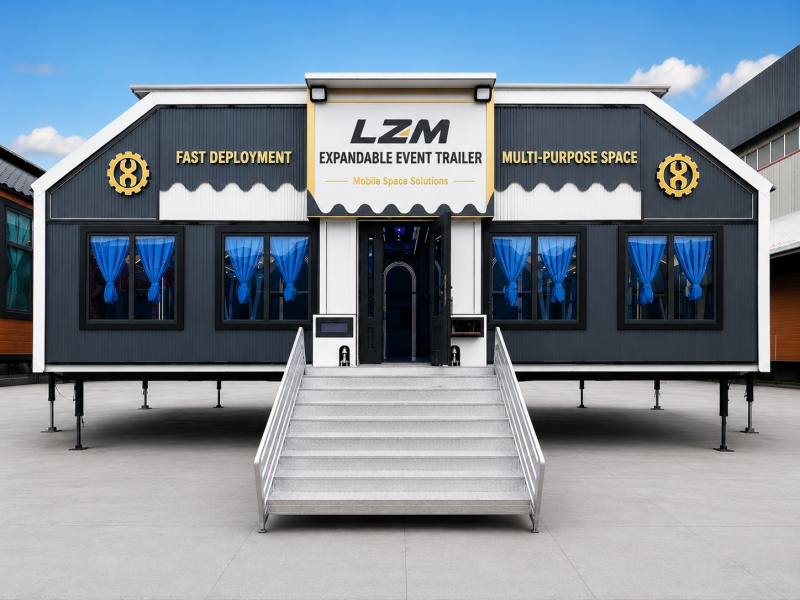
An expandable event trailer can provide a relocatable indoor platform for previews, bidder registration, hospitality and live auction activities.
An auction begins long before the auctioneer calls the first lot.
Potential buyers often want time to inspect what they may purchase.
For different auction categories, this could involve:
Artwork
Jewelry
Watches
Collectibles
Luxury goods
Design objects
Automotive memorabilia
A mobile facility can provide an enclosed preview environment before the sale begins.
Display areas can be arranged according to the type and quantity of items being presented.
This is where a large expandable interior becomes interesting.
The same space does not necessarily need to perform one function all day.
During the preview period, the layout can emphasize:
Displays → Product Information → Buyer Consultation
Before the live auction, selected furniture or displays can be rearranged.
The space can then transition toward:
Registration → Bidder Seating → Auctioneer Position → Screens → Hospitality
One mobile asset supports different stages of the sales event.
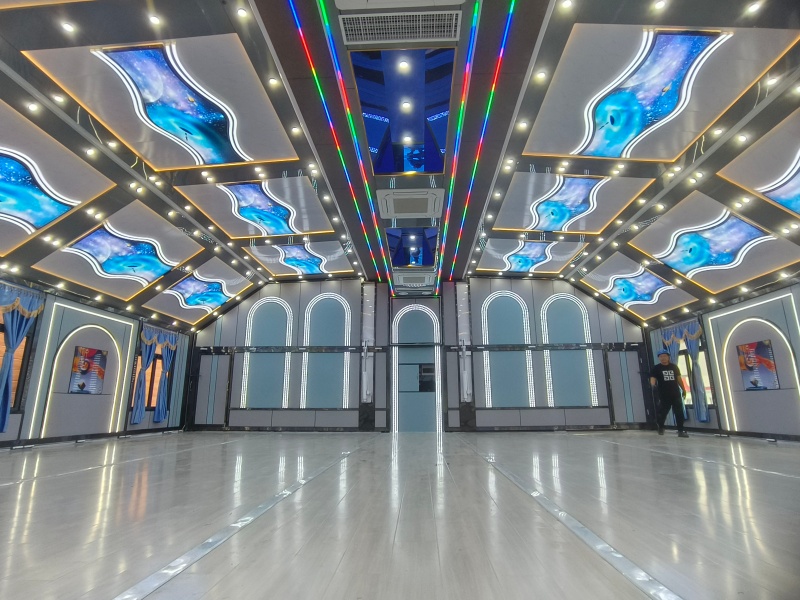
A live auction has its own operational requirements.
The layout may need to consider:
Auctioneer visibility
Bidder sightlines
Seating arrangement
Registration desk
Display screens
Sound system
Staff circulation
For higher-capacity events, the open floor plan can prioritize seating.
For invitation-only luxury auctions, fewer seats and more hospitality areas may be appropriate.
The interior should follow the auction format rather than a standard trailer layout.
A mobile auction business does not necessarily depend on one city.
Imagine a specialist auction company running a Canadian program:
Toronto → Ottawa → Montreal → Calgary → Vancouver
The assets being sold may change.
The buyers may change.
The city changes.
But the company's branded auction environment can travel with the campaign.
That creates a different alternative to repeatedly renting hotel ballrooms or constructing temporary event environments.
Not every seller wants to transport an entire collection to a distant auction house.
For valuable or specialized collections, an auction company could potentially bring its customer-facing facility closer to the seller.
The trailer could be positioned at an appropriate nearby site and used for:
Buyer preview
Authentication meetings
Private appointments
Auction-day reception
Live bidding
This concept could be particularly relevant to auction businesses that specialize in geographically dispersed assets.
At the premium end of the market, an auction can also be a hospitality event.
Invited buyers, collectors and business partners may spend several hours at the location.
The interior could therefore combine the auction function with:
Comfortable seating before and after bidding.
For discussions involving particular lots or purchasing procedures.
A quieter area for selected customers and sellers.
Supporting longer events and evening auctions.
The objective is to create an environment appropriate to the value of the items being sold.
That depends on the specific trailer design, access dimensions and vehicle requirements.
For automotive auctions, a more practical concept may be to use the expandable trailer as the buyer and auction environment, while the vehicles remain outside or pass through a separate presentation area.
Customers can inspect cars outdoors and return inside for:
Registration
Vehicle information
Live bidding
Finance discussions
Hospitality
This separates the large physical assets from the climate-controlled customer environment.
Digital bidding has changed the auction industry, but it does not remove the value of physical presentation.
For certain categories, buyers still want to:
Inspect items personally
Meet specialists
Attend previews
Network with other collectors
Experience the auction atmosphere
A mobile auction house can also integrate digital systems.
Screens, cameras, sound equipment and internet connectivity can support hybrid auctions involving both in-person and remote bidders.
The buyer does not necessarily have to be an auction company.
An event rental operator could potentially provide a specialized mobile auction venue to different clients.
One month:
Classic car auction
Next month:
Luxury watch sale
Later:
Charity auction
This creates another possible business model for an expandable event trailer.
The physical platform stays the same while branding, displays and interior arrangements change according to the customer.
Before choosing the trailer configuration, the operator should consider how the facility will actually be used.
Important questions include:
What type of assets will be auctioned?
How many bidders will attend?
Is a preview area required?
How many seats are needed?
Will online bidding be integrated?
Is VIP hospitality important?
Will items be displayed inside?
How frequently will the facility move?
Which cities will it visit?
What climate conditions will it encounter?
These answers determine the required floor plan and technical configuration.
A conventional auction house waits for sellers and buyers to come to it.
A mobile auction environment reverses part of that model.
The business can take its branded sales environment closer to collections, customers and special events.
For specialist auction companies, luxury sales businesses and event rental operators, mobility can turn the auction venue itself into a reusable commercial asset.
LZM expandable event trailers can be customized with different interior layouts, climate systems, lighting, screens, sound equipment and customer areas according to project requirements.
See the expandable platform that could form the basis of a traveling auction environment: