Welcome: Laizhou Machinery Group



Healthcare services are often concentrated in hospitals and permanent medical facilities.
However, many health programs need to reach people outside traditional locations.
Companies may organize employee health checks.
Communities may require public screening events.
Healthcare organizations may need temporary facilities during special campaigns.
In these situations, the challenge is not only medical equipment.
The challenge is creating a professional environment where patients can register, wait, consult and receive services comfortably.
An expandable event trailer can provide a flexible indoor platform for mobile healthcare applications.
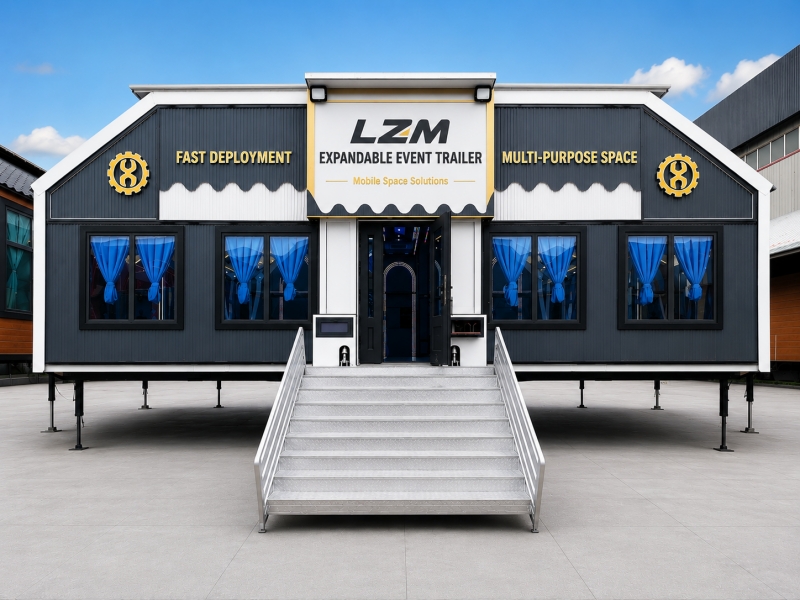
Not every person can easily visit a hospital or clinic.
Mobile healthcare programs can help organizations reach:
Remote communities
Corporate workplaces
Public events
Temporary service locations
Regional health campaigns
A professional mobile facility allows healthcare providers to bring services closer to the people who need them.
Many traditional medical vehicles focus on transportation.
A large expandable event trailer focuses on creating usable indoor space.
After expansion, the interior can be planned for different healthcare functions.
Possible areas include:
For:
Patient registration
Information collection
Appointment management
For:
Doctor conversations
Health assessments
Private discussions
For:
Health checks
Testing procedures
Basic examinations
For:
Medical records
Equipment preparation
Team coordination
Many companies invest in employee health programs.
Instead of asking hundreds of employees to visit different medical facilities, organizations may prefer bringing screening services directly to the workplace.
A mobile medical space can support:
Annual health examinations
Employee wellness campaigns
Preventive health programs
Insurance-related screenings
The company receives a more convenient service experience, while healthcare providers can organize operations more efficiently.
New York has:
Large corporate populations
Dense urban communities
Major healthcare networks
Frequent public events
This creates demand for flexible healthcare service models.
A mobile screening facility can potentially operate at:
Corporate campuses
Community locations
Public health events
University areas
Temporary campaigns
The same concept can also apply to other major cities and regional healthcare programs.
Healthcare environments are different from ordinary commercial spaces.
Patients may need confidential conversations and private examinations.
The interior design should consider:
Separate consultation rooms
Privacy partitions
Patient flow
Staff circulation
Secure storage
The objective is to create a professional healthcare environment rather than simply an open room.
Medical screening environments require stable indoor conditions.
Project planning should consider:
Number of patients
Medical equipment
Operating hours
Summer temperatures
Winter conditions
Possible requirements include:
Air conditioning
Heating
Electrical distribution
Lighting
Data connections
Equipment interfaces
The final configuration depends on the actual healthcare application.
A permanent clinic provides long-term service at one location.
A mobile medical facility provides another advantage:
The ability to move according to demand.
For example:
Corporate Health Program → Community Screening Event → Regional Health Campaign
One facility can support different projects during its operating life.
The interior configuration can be customized according to the service model.
Examples:
Including:
Registration
Testing area
Consultation
Including:
Multiple examination rooms
Waiting areas
Staff workspace
Including:
Customer reception
Private consultation
Document processing
The layout should follow the healthcare workflow.
Before designing the facility, customers should consider:
What healthcare service will be provided?
How many people are expected daily?
How many medical staff will work inside?
Are private rooms required?
What equipment will be installed?
Will the unit move between cities?
What climate conditions will it face?
What electrical requirements are needed?
These details determine the appropriate size and interior arrangement.
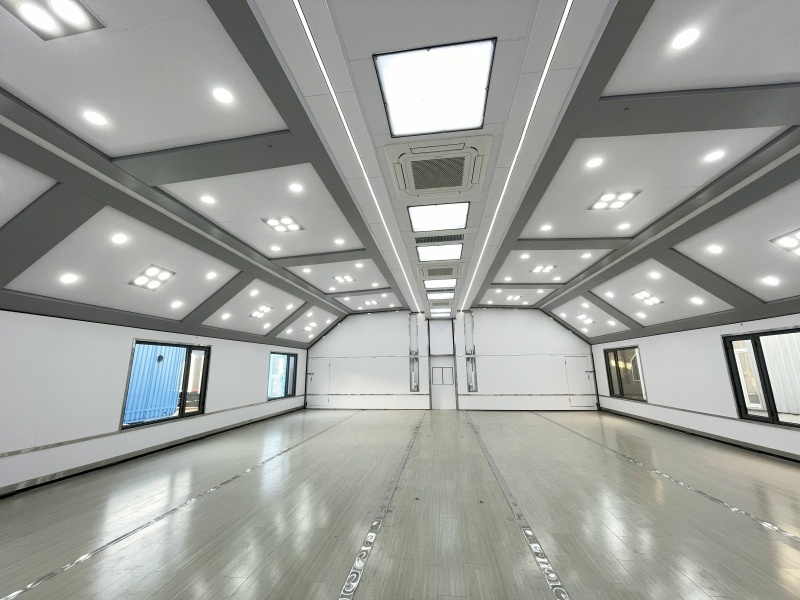
Healthcare demand can change quickly.
A mobile screening center gives organizations another option when they need additional service capacity without building a permanent facility.
For hospitals, healthcare companies, insurance providers and community programs, an expandable event trailer can become a reusable platform for delivering healthcare services in different locations.
Explore the expandable platform that can be customized for healthcare and community service projects:
Expandable Mobile Healthcare Facility Platform