Welcome: Laizhou Machinery Group



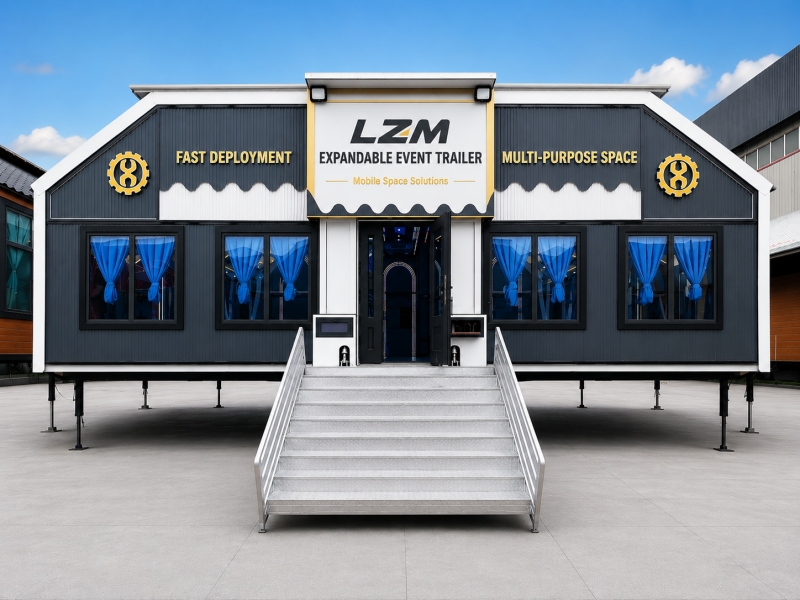
An expandable event trailer operating near the coast faces a different environment from the same trailer used in a dry inland location.
The difference is not simply rain.
Coastal environments can expose steel structures and components to a combination of high humidity, moisture and airborne salts. Over time, these conditions can accelerate corrosion if the trailer has not been designed, protected and maintained for its operating environment.
This becomes particularly important for an expandable event trailer because the product is not a simple enclosed steel box.
It contains:
Main structural frame
Expandable sections
Moving connections
Hydraulic components
Hinges and joints
Fasteners
Undercarriage components
Doors and exterior interfaces
For buyers planning an expandable event trailer project in coastal areas of Canada, environmental conditions should therefore be discussed with the manufacturer before production begins.
Steel corrosion requires the right environmental conditions.
Moisture is one of the major factors, while salt contamination can further increase corrosion risk.
A trailer operating near the ocean may therefore experience different exposure from one operating hundreds of kilometers inland.
The actual severity depends on factors such as:
Distance from the coastline
Local humidity
Salt exposure
Rainfall
Temperature
Storage conditions
Frequency of operation
Whether the trailer is stored indoors or outdoors
Road conditions during transportation
This is why simply specifying the destination as “Canada” is not enough.
Vancouver Island, a coastal site in British Columbia and an inland location can present very different environmental conditions.
The steel structure is the foundation of an expandable event trailer.
Interior decoration can be repaired or replaced relatively easily.
Structural corrosion is a much more serious long-term issue.
Before production, the buyer and manufacturer should discuss the expected operating environment so that an appropriate corrosion-protection system can be selected.
Depending on the project specification and manufacturing solution, protection may involve a combination of:
Surface Preparation + Protective Coating + Finish Coating + Detail Protection
The exact coating system should be determined according to the actual project requirements rather than assuming that one standard treatment is appropriate for every climate.
A protective coating performs only as well as the surface underneath it allows.
Before applying the selected coating system, the steel surface needs appropriate preparation.
The objective is to remove contaminants and create suitable conditions for the protective system to bond to the steel.
For commercial buyers, this is an important point because corrosion resistance cannot be judged simply by looking at the final paint color.
Two trailers may look almost identical when new while having very different preparation and coating processes underneath.
Large event trailers contain many areas that customers rarely see.
Examples can include:
Underside of the structure
Internal frame sections
Connections
Corners
Welded areas
Mounting points
Areas around moving mechanisms
These locations may be more difficult to inspect and maintain after the trailer has entered service.
For a coastal project, corrosion protection should therefore not focus only on the visible exterior surfaces.
The areas that guests never see may be more important to long-term structural durability than the decorative surfaces they do see.
A conventional permanent building does not repeatedly fold and unfold.
An expandable event trailer does.
That creates additional engineering considerations.
Moving interfaces may experience:
Mechanical movement
Vibration
Contact between components
Repeated deployment
Repeated transportation
The protective system therefore needs to be considered together with the mechanical design.
Areas around moving components should also remain accessible for inspection and maintenance.
The lower part of a trailer operates much closer to road contaminants than the interior structure.
During transportation it may be exposed to:
Water
Mud
Road debris
Salt contamination
Winter road-treatment materials
This can be particularly relevant in parts of Canada where road salt or other de-icing materials are used during winter.
For a trailer expected to travel regularly, the buyer should therefore consider both coastal exposure at the event site and road exposure during transportation.
These are related but different corrosion risks.
A large steel structure may receive substantial attention while relatively small components are overlooked.
But an expandable trailer contains many:
Bolts
Screws
Hinges
Brackets
Connectors
Mounting hardware
If these components are poorly suited to the environment, localized corrosion can develop even when the main structure remains in good condition.
Material selection and surface protection for hardware should therefore form part of the overall corrosion strategy.
Hydraulics are central to the operation of an expandable event trailer.
Depending on the design, the hydraulic system may operate expansion, support or other moving functions.
Coastal conditions mean the buyer should also consider the environment around:
Hydraulic cylinders
Fittings
Hoses
Connections
Mounting components
Regular inspection becomes particularly important because hydraulic components combine mechanical movement with environmental exposure.
The manufacturer should also design the system so that important components can be accessed for servicing.
A good coating system is important.
Preventing unnecessary water accumulation is equally important.
The trailer design should avoid creating locations where water can remain trapped for extended periods.
Attention should be given to:
Drainage
Roof-water management
Exterior joints
Door interfaces
Expansion joints
Lower structural areas
Standing water can create a more aggressive local environment than surfaces that dry quickly.
For this reason, corrosion protection is not just a coating specification—it is also a design issue.
Expandable event trailers require effective sealing primarily to protect the interior from weather.
But sealing can also influence corrosion.
Poorly controlled water penetration can allow moisture to reach concealed structural areas.
The expansion interfaces should therefore be designed with consideration for:
Rain
Wind-driven moisture
Dust
Air leakage
Repeated opening and closing
For coastal applications, regular inspection of seals should become part of the maintenance program.
A damaged seal that appears to be a minor comfort issue may eventually allow moisture into areas that are difficult to inspect.
Buyers sometimes focus heavily on the visible exterior wall material.
But attractive exterior panels do not automatically protect the structural frame underneath.
The trailer should be considered as several systems:
Exterior Finish
provides appearance and part of the weather barrier.
Building Envelope
controls water and air penetration.
Steel Structure
provides structural strength and requires its own corrosion protection.
Each system has a different function.
Long-term durability depends on how they work together.
Corrosion discussions often focus exclusively on structural steel.
Electrical systems also deserve attention.
High humidity and moisture can affect:
Electrical enclosures
Connections
Exterior lighting
Sensors
Control equipment
Cable interfaces
The electrical configuration should therefore be selected according to the expected installation environment and applicable project requirements.
Outdoor and exposed components may require different protection from equipment installed inside the climate-controlled interior.
A coastal climate can also create high indoor humidity.
For an event venue containing many guests, HVAC is responsible not only for temperature but also for maintaining a comfortable indoor environment.
The system needs to consider:
Outdoor temperature
Humidity
Guest capacity
Door-opening frequency
Interior volume
Lighting
Audiovisual equipment
This becomes particularly important for weddings, corporate events and hospitality applications where guests may remain inside for several hours.
A mobile event venue may spend more time stored than operating.
That storage environment can influence long-term condition.
Questions for the operator include:
Will the trailer remain outdoors throughout the year?
Will it be stored close to the ocean?
Can it be stored under cover?
Will it be cleaned before long-term storage?
Will it remain closed for extended periods?
A trailer designed for frequent events but then stored for months in a damp coastal environment still requires appropriate inspection and maintenance.
Salt contamination should not simply be allowed to accumulate indefinitely.
Operators working in coastal or winter-road environments should establish a cleaning and inspection routine appropriate to the actual conditions.
Particular attention may be needed after:
Coastal deployments
Long-distance transportation
Winter road use
Heavy rain
Exposure to contaminated road spray
Cleaning also creates an opportunity to inspect the structure and components before minor damage becomes a larger maintenance issue.
Commercial event trailers move.
That means scratches and local coating damage can occur during transportation, deployment, loading or maintenance.
In a low-corrosion environment, a small damaged area may develop slowly.
In a more aggressive coastal environment, exposed steel can deteriorate faster.
Operators should therefore inspect for:
Scratches
Chips
Impact damage
Worn areas
Corrosion around fasteners
Coating damage near moving components
Early repair is usually simpler than allowing corrosion to spread underneath the surrounding coating.
A corrosion-protection system still needs inspection.
That becomes difficult if critical areas cannot be reached.
For a commercial expandable trailer, buyers should consider whether important:
Structural areas
Hydraulic components
Electrical equipment
Expansion mechanisms
Drainage points
remain reasonably accessible after the interior is completed.
This is particularly important for a trailer expected to operate for many years.
A beautiful interior should not make essential maintenance impossible.
There is no universal answer.
Different steel components, structural designs, manufacturing processes and project environments may require different protection strategies.
A buyer should not assume that one treatment is automatically the correct solution for every component.
Instead, the project should begin with:
Operating Environment → Corrosion Risk → Component Exposure → Appropriate Protection System
For a coastal Canadian project, the environmental requirements should be discussed before the final manufacturing specification is confirmed.
If a buyer has a specific coating standard, corrosion category or testing requirement, it should be provided to the manufacturer during the technical stage.
This is particularly important when comparing manufacturers.
Supplier A may quote a standard trailer.
Supplier B may quote a trailer with additional corrosion protection.
The two prices are not directly comparable.
The buyer should therefore tell each supplier:
Destination
Distance from the coast
Expected operating environment
Storage conditions
Winter-road use
Required service life
Any required coating standard
Only then can suppliers propose comparable solutions.
Otherwise, a lower quotation may simply reflect a lower environmental specification.
An expandable event trailer for coastal Canada still performs the same basic commercial functions as one used elsewhere.
It can be configured for:
Weddings
Banquets
Corporate events
Hospitality
Brand activations
Sports events
Exhibitions
But the environment changes the technical specification behind the visible event space.
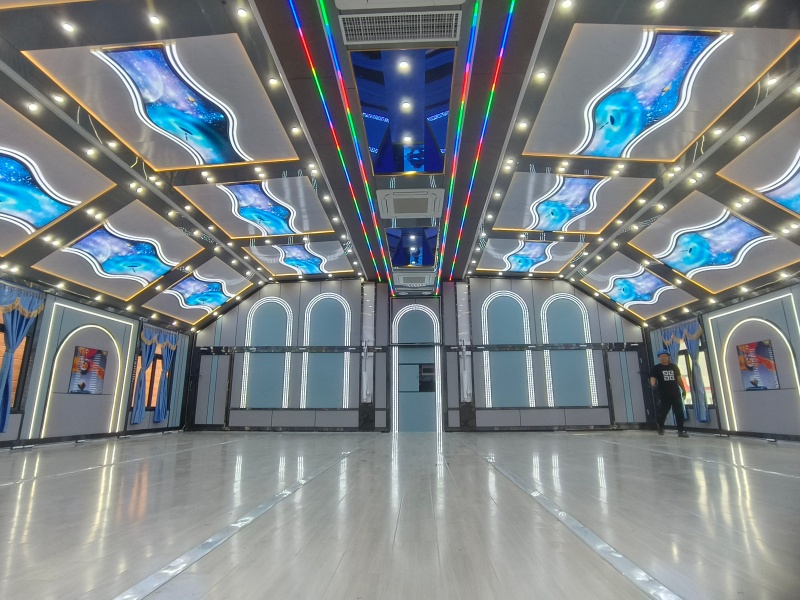
For a coastal project, buyers should think beyond interior layout and guest capacity.
Steel protection, hardware, hydraulics, sealing, drainage, electrical equipment and maintenance strategy all contribute to long-term durability.
LZM can develop expandable event trailer configurations according to the intended application and operating environment. For coastal projects, corrosion-protection requirements should be defined during the technical specification stage so that the appropriate manufacturing solution can be evaluated before production.
Explore LZM expandable event trailer sizes, configurations and customization options for commercial event projects:
Expandable Event Trailer for Coastal & Commercial Applications