Welcome: Laizhou Machinery Group



Launching a new vehicle is no longer only about placing a car under bright lights and inviting customers to look at it.
Automotive brands increasingly want customers to experience the product.
They may want visitors to explore new technology, watch digital presentations, configure a vehicle, meet sales representatives, join a test drive or spend time inside a branded hospitality environment.
The challenge is that these campaigns often move.
A new model may be introduced in one city and then promoted through a series of dealer events, shopping destinations, motorsport venues or regional test-drive programs.
An automotive brand activation trailer can provide a reusable physical venue that travels with the campaign.
Once deployed, an expandable event trailer can create a significantly larger indoor environment for product presentation, digital experiences, customer meetings and hospitality.
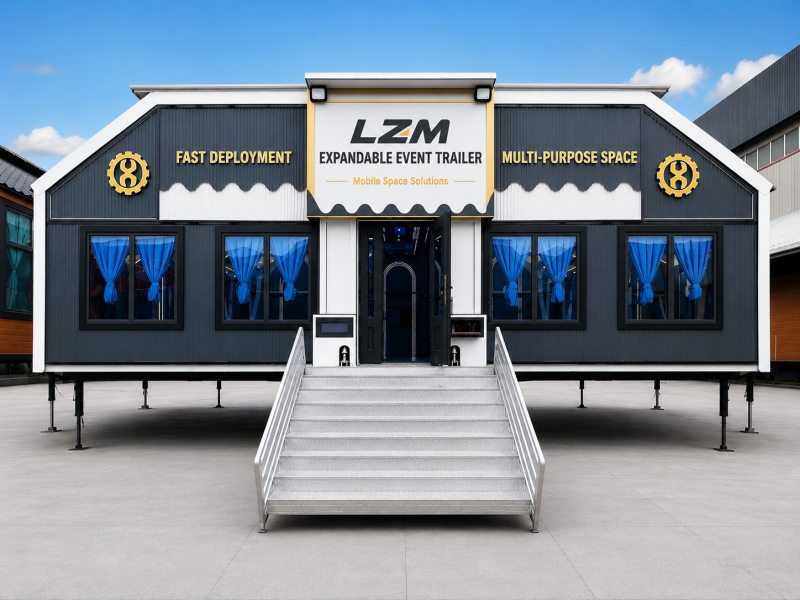
An automotive brand activation trailer is a mobile event venue configured specifically for vehicle marketing and customer engagement.
Unlike a conventional transport trailer carrying promotional equipment, the expandable structure becomes part of the event itself.
The interior can support functions such as:
Vehicle technology presentations
Digital configurators
Product displays
Customer reception
Sales consultations
VIP hospitality
Interactive experiences
Brand storytelling
The exterior can also carry campaign graphics, digital displays and brand identity.
The result is not simply a trailer parked beside a vehicle.
It is a mobile automotive experience center that can be deployed at different campaign locations.
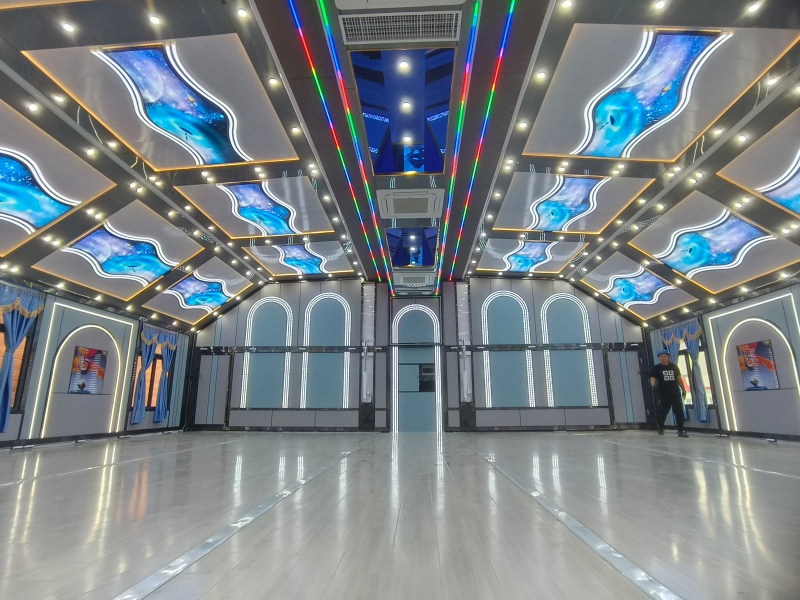
One of the first layout decisions is where the actual vehicle will be displayed.
For many automotive activations, positioning the vehicle outside the expandable trailer can make more sense.
The trailer then provides the supporting environment:
Vehicle Display Outside + Brand Experience Inside
This arrangement can preserve valuable interior floor area while allowing visitors to see the vehicle immediately.
The indoor space can then be used for:
Technology explanation
Digital displays
Customer conversations
Product configuration
Hospitality
Registration
For campaigns involving several vehicles, the expandable venue can act as the central customer hub surrounded by the display fleet.
A new vehicle can contain hundreds of features that are difficult to communicate through a static display.
Modern automotive launches may need to explain:
Electric powertrain technology
Battery range
Charging
Driver assistance
Connectivity
Infotainment
Safety systems
Interior options
Performance
Customization
A controlled indoor environment gives the marketing team more ways to communicate these features.
Large LED screens can show technical animations.
Interactive displays can allow visitors to explore specifications.
Sales representatives can discuss configurations away from the noise of the outdoor event.
The mobile venue becomes an extension of the vehicle presentation.
EV launches can require more customer education than conventional vehicle introductions.
Potential buyers may have questions about:
Charging time
Charging infrastructure
Battery capacity
Driving range
Battery warranty
Home charging
Public charging
Energy consumption
These conversations are difficult to handle effectively in a crowded outdoor display area.
An expandable event trailer can provide a dedicated environment where the brand explains the technology in a structured way.
For an EV campaign, the visitor journey might be:
Vehicle Introduction → Battery & Charging Education → Digital Configuration → Test Drive Registration
This turns the launch into an educational experience rather than simply a product display.
Automotive customers often want to see how different options change the vehicle.
Inside the activation trailer, touchscreen displays or computers can potentially allow visitors to explore:
Exterior colors
Wheels
Interior finishes
Equipment packages
Accessories
Technology options
A customer who has just inspected the physical vehicle outside can then enter the trailer and create a personalized configuration.
This connects the physical and digital parts of the buying journey.
Large displays are particularly valuable for automotive campaigns because many product benefits cannot be seen directly.
A screen can demonstrate:
Safety technology
Vehicle performance
Battery systems
Manufacturing
Aerodynamics
Interior features
Brand films
Lifestyle content
During a formal launch, the same display can support presentations.
Later in the campaign, it can continuously show promotional content.
Digital content also makes it easier to adapt the same trailer for different models.
An attractive interior is not enough if visitors do not know where to go.
Automotive activation layouts should consider the complete customer journey.
For example:
Outdoor Vehicle Display
↓
Trailer Entrance
↓
Brand Introduction
↓
Technology Experience
↓
Digital Configuration
↓
Sales Consultation
↓
Test Drive Registration
This sequence can change according to the campaign.
But defining the desired visitor journey before designing the interior helps prevent the space from becoming a collection of unrelated screens and furniture.
For many automotive campaigns, the most valuable action is not viewing the vehicle.
It is getting the customer behind the wheel.
An activation trailer can provide an organized registration and waiting area for test drives.
The operator may need:
Reception desk
Registration terminals
Waiting seating
Driver briefing area
Route information
Staff workstations
This can make a touring test-drive program more professional and easier to manage.
Where customer information is collected, applicable privacy and data-protection requirements should be followed.
Not every visitor to an automotive launch has the same commercial value.
Brands may invite:
Fleet buyers
Corporate customers
Dealers
Distributors
Media
Influencers
Existing premium customers
These guests may require a quieter hospitality environment.
Depending on the trailer layout, part of the interior can be configured with:
Lounge seating
Meeting tables
Refreshment area
Private discussion space
The same activation can therefore support both public marketing and higher-value customer conversations.
A new vehicle model may need to be introduced across many dealerships.
Building a premium launch environment at every dealership can be expensive and inconsistent.
A mobile activation trailer creates another model:
Dealer A → Dealer B → Dealer C → Dealer D
The same branded venue travels through the dealer network.
Each location receives a similar customer experience without constructing permanent additional event space.
For a national distributor, this can create consistency across a multi-city launch campaign.
Automotive dealerships depend heavily on customers choosing to visit them.
Brand activations can reverse that relationship.
Instead of waiting for customers to visit a showroom, the brand can bring the experience closer to places where potential customers already spend time.
Subject to site access and permissions, campaigns might operate around:
Shopping destinations
Lifestyle events
Business districts
Festivals
Sports events
Tourism destinations
The trailer provides the branded indoor environment while vehicles remain visible around the activation site.
Motorsport audiences already have a strong interest in vehicles, performance and technology.
For automotive brands, these events can provide an opportunity to combine:
Brand Activation + Product Display + Hospitality + Technology Presentation
An expandable trailer can provide the indoor part of that experience.
The same venue may serve public visitors during part of the event and invited customers during another period.
This creates greater utilization from the temporary infrastructure.
The terms can overlap, but the commercial objectives may differ.
A mobile automotive showroom focuses primarily on presenting vehicles and supporting sales.
An automotive brand activation trailer may have a broader objective:
Generate awareness
Create engagement
Introduce technology
Collect leads
Support test drives
Provide hospitality
Strengthen brand perception
Understanding the campaign objective helps determine the correct interior layout.
A sales-focused project may need more consultation space.
An experiential campaign may prioritize interactive displays and visitor circulation.
A touring trailer may operate for several vehicle models over its service life.
The base interior should therefore avoid becoming unnecessarily dependent on one launch campaign.
Changeable elements can include:
Digital graphics
LED content
Printed panels
Exterior graphics
Product displays
Furniture
Decorative lighting
This allows the physical venue to remain reusable even when the campaign changes.
For marketing agencies operating the trailer for several automotive clients, rebranding flexibility becomes even more important.
The exterior surface of a large expandable trailer can become a significant visual asset.
Depending on the design, exterior areas may support:
Vehicle imagery
Model names
Campaign slogans
Brand graphics
Digital screens
Directional information
This allows the venue to attract attention before visitors enter.
For touring campaigns, the trailer can maintain a consistent visual identity across multiple locations.
Automotive presentation depends heavily on lighting quality.
Poor lighting can make even a premium vehicle or display environment look ordinary.
The activation venue may require separate lighting functions for:
General Lighting
for safe visitor movement.
Product Lighting
for displays and materials.
Atmospheric Lighting
for brand identity.
Presentation Lighting
for launch events and media activities.
The lighting design should be coordinated with screens, displays and interior finishes.
Automotive campaigns can operate during hot summers, cold winters or unpredictable weather.
A climate-controlled expandable trailer provides a more consistent environment for customers and staff.
HVAC capacity should consider:
Expanded interior volume
Number of visitors
Number of staff
LED screens
Computers
Lighting
Outdoor climate
Door-opening frequency
A busy public activation can generate considerably more internal heat than an empty display environment.
The HVAC specification should therefore reflect realistic visitor volumes.
Modern automotive activations rely heavily on digital technology.
Potential electrical loads include:
LED screens
Touchscreens
Computers
Lighting
Sound systems
HVAC
Refrigeration
Network equipment
Charging equipment for devices
The buyer should prepare an equipment list before production so that electrical distribution can be planned correctly.
If the project requires EV charging infrastructure, this should be treated as a separate technical requirement and designed according to the intended charging equipment and local electrical standards.
Touring campaigns need to move more than the visible display equipment.
The operator may also carry:
Promotional materials
Cleaning supplies
Printed literature
Staff equipment
Giveaways
Replacement graphics
Technical accessories
Some storage may be incorporated into the trailer, while other materials may travel separately.
The correct strategy depends on how frequently the campaign relocates.
A touring campaign loses efficiency if every stop requires extensive rebuilding.
Buyers should therefore think about:
Deployment time
Furniture positioning
Screen setup
Branding installation
Equipment connections
Packing
Retraction
A well-planned activation venue should support repeated use.
This is especially important for campaigns with tight schedules between cities.
The asset does not necessarily need to belong to an automaker.
Experiential agencies and event production companies can operate an expandable trailer as part of their own equipment fleet.
One month it may support an EV launch.
The next month it may become a premium SUV experience.
Later it may be reconfigured for a tire manufacturer, automotive technology company or motorsport sponsor.
This business model places even greater importance on:
Flexible Layout + Rebranding + Durable Interior + Repeated Deployment
Before selecting an expandable event trailer, the buyer should define:
Campaign objective
Vehicle type
Whether vehicles remain outside or enter the venue
Expected visitor volume
Test-drive requirements
Digital equipment
LED screen dimensions
Customer consultation requirements
VIP hospitality requirements
Branding strategy
HVAC requirements
Electrical loads
Storage requirements
Number of campaign locations
Typical deployment sites
These details allow the trailer to be designed around the actual campaign rather than simply selecting a standard interior from a catalogue.
Transportation dimensions, road requirements, electrical systems, accessibility, fire safety, public occupancy, site permissions and other applicable requirements should be evaluated according to the destination market and actual project.
The commercial value of an automotive activation trailer becomes clearer when the campaign moves.
A permanent showroom serves customers at one address.
A mobile activation venue can potentially follow the audience.
It can support:
Vehicle Launches → Dealer Tours → Test-Drive Events → Motorsport → Shopping Destinations → Corporate Customer Events
The structure remains reusable while branding, content and interior displays change with the campaign.
For automotive brands, distributors and experiential agencies, this creates a physical marketing platform rather than a temporary structure that must be rebuilt for every event.
LZM manufactures expandable event trailers with customizable interior layouts, exterior branding, LED display provisions, HVAC, lighting and electrical systems for automotive launches, experiential marketing and other commercial event projects.
For campaigns that form part of a wider experiential-marketing program, LZM also covers the use of expandable trailers for brand activation at sporting events, helping build a broader mobile brand-experience platform.
Explore LZM expandable event trailers for automotive brand activation and vehicle launch projects:
Automotive Brand Activation & Expandable Event Trailer