Welcome: Laizhou Machinery Group


Giving someone a free drink is easy.
Creating an experience that makes them remember the brand is much harder.
For beverage companies, product sampling is often only one part of a wider marketing campaign.
A brand may want consumers to:
See the Product → Enter the Brand Space → Try the Drink → Interact with Digital Content → Share the Experience
At a festival, shopping destination, sports event or outdoor promotion, creating that complete environment usually requires temporary infrastructure.
An expandable brand activation trailer offers another option.
The trailer travels in a compact transport configuration and expands at the destination to create an enclosed, climate-controlled promotional venue.
For beverage brands and experiential marketing agencies, it can combine sampling, product presentation, hospitality and customer engagement inside one reusable mobile platform.
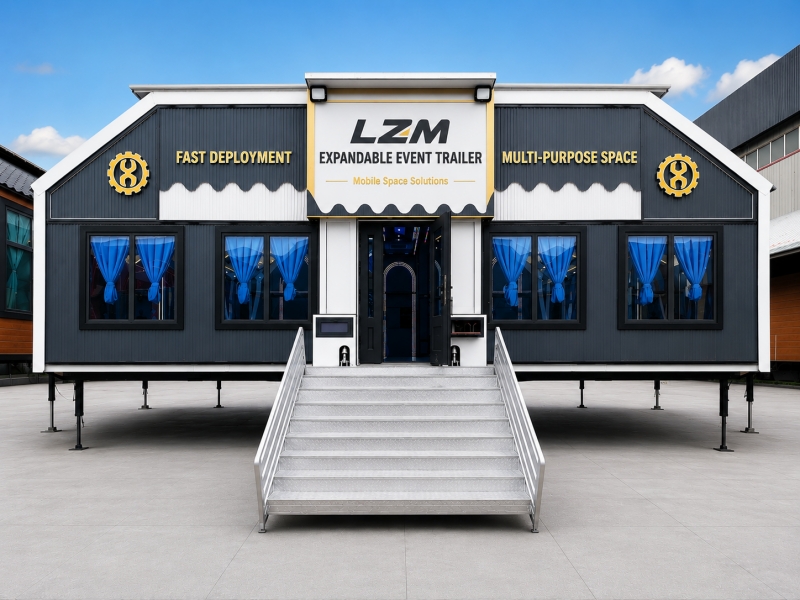
A beverage brand activation trailer is a mobile event space configured around promotional campaigns for drinks and consumer brands.
Depending on the campaign, the venue may support:
Product sampling
New-product launches
Brand storytelling
Customer engagement
Digital interaction
VIP hospitality
Retail promotion
Social media content
Unlike a simple sampling booth, the expandable trailer provides a larger controlled environment where the visitor can spend more time with the brand.
The objective is not only:
Try this drink.
It is:
Experience this brand.
Traditional sampling often happens at a counter.
A promoter hands the consumer a product.
The interaction may last less than a minute.
A larger activation space allows the campaign to create a sequence.
For example:
Brand Entrance
↓
Product Introduction
↓
Sampling Area
↓
Interactive Experience
↓
Photo / Social Media Zone
↓
Exit
The exact layout depends on the campaign.
But thinking about the visitor journey helps transform sampling from a transaction into an experience.
When a company introduces a new drink, it may need to communicate:
Flavor
Ingredients
Product positioning
Packaging
Brand story
Usage occasions
Lifestyle identity
Consumers can taste the product quickly.
Understanding why the product is different takes longer.
Inside an expandable activation venue, the brand can combine physical sampling with:
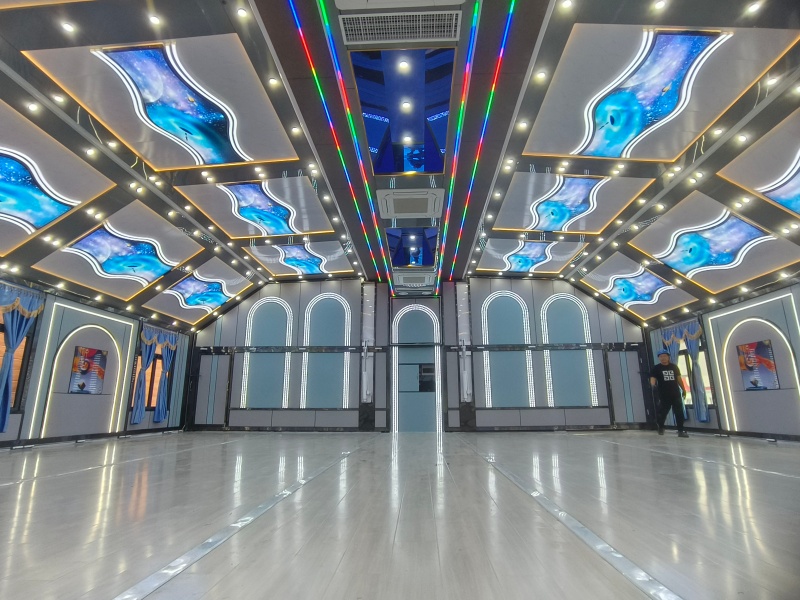
LED content
Product displays
Graphics
Interactive screens
Brand ambassadors
This provides more opportunities to communicate the product story.
Energy drinks are often marketed through lifestyle rather than the beverage alone.
Campaigns may connect the brand with:
Sports
Music
Gaming
Motorsports
Outdoor activities
Youth culture
A mobile activation venue can follow those audiences.
The same trailer might operate at a sporting event one weekend and a music or lifestyle event later.
Interior graphics and digital content can change while the physical venue remains the same.
This is where mobility becomes commercially useful.
For mass-market beverage brands, visitor volume may be a priority.
The layout therefore needs efficient circulation.
A high-throughput activation might use:
Entry → Product Display → Sampling → Interaction → Exit
rather than large lounge areas.
The operator should consider:
Visitors per hour
Sampling time
Queue management
Staff positions
Product replenishment
Waste collection
A beautiful venue that creates a long bottleneck at the entrance is not an efficient activation.
Not every campaign is designed for maximum visitor numbers.
Premium beverage brands may want a more controlled environment for:
Invited guests
Distributors
Retail partners
Media
Influencers
Corporate customers
The trailer can then use more floor area for:
Lounge seating
Product presentation
Meeting areas
Hospitality
In this case, the value comes from the quality of interaction rather than the number of visitors passing through the venue.
Festivals bring large audiences together for extended periods.
This creates opportunities for beverage brands to combine:
Product Sampling + Brand Visibility + Entertainment + Social Engagement
But outdoor festivals also create operational challenges:
Heat
Rain
Dust
Limited infrastructure
Temporary power
Large visitor flows
An enclosed expandable trailer can provide a controlled indoor component within the wider outdoor activation.
It does not replace the outdoor campaign.
It gives the brand another type of customer environment.
Sports sponsorship often involves much more than placing a logo around the venue.
Brands want fans to interact.
A beverage activation trailer can potentially support:
Sampling
Sponsor displays
Competitions
Digital games
Photo opportunities
VIP hospitality
For campaigns already connected to a team, athlete or event, the physical activation gives the sponsorship a customer-facing element.
The broader use of expandable trailers for brand activation at sporting events can also form part of a larger experiential marketing program.
Not every activation lasts one weekend.
Some brands may want a temporary promotional venue operating for days or weeks.
Subject to site approval, suitable shopping and commercial locations can provide:
Consistent foot traffic
Longer operating periods
Easier customer access
Strong retail connections
A reusable trailer can be deployed for the campaign and relocated when the promotion finishes.
This makes it different from building a temporary promotional environment from scratch at every location.
For beverage marketing, the outside of the venue matters.
Consumers may decide whether to enter within seconds.
Exterior design can potentially incorporate:
Product imagery
Brand colors
Campaign graphics
Large logos
Digital displays
Promotional messaging
The expanded structure itself can become a visual landmark at the event.
This is particularly valuable in busy environments where many brands compete for attention.
A strong activation should not feel like:
Impressive branding outside → generic room inside.
The visitor experience should remain consistent.
Interior elements may include:
Branded wall graphics
Digital content
Product displays
Lighting
Furniture
Sampling counters
Interactive installations
For a reusable trailer, many of these elements can be designed to change between campaigns.
A sampling counter looks simple, but its position affects the entire venue.
The operator needs to consider:
Customer approach
Queue formation
Staff working space
Product storage
Refrigeration
Waste
Cleaning
Restocking
If hundreds of samples are distributed during an event, these operational details become important.
The counter should therefore be planned as part of the workflow rather than simply added where space remains.
Many beverage products need to be served cold.
That means the equipment list may include:
Refrigerators
Display coolers
Freezers
Ice equipment
Other cooling systems
These loads need to be considered alongside:
HVAC
LED screens
Lighting
Sound
Computers
The buyer should provide the expected equipment list before the electrical system is finalized.
Some beverage activations may need water for:
Cleaning
Hand washing
Equipment
Staff operations
Others may require very little onboard water infrastructure.
The correct solution depends on:
Event duration
Site utilities
Sampling method
Equipment
Local requirements
The buyer should therefore avoid adding unnecessary plumbing simply because another trailer configuration included it.
Sampling generates waste.
Depending on the product, this may include:
Cups
Bottles
Cans
Packaging
Napkins
Product containers
A high-volume activation should have a plan for collecting and removing this waste without disrupting the customer experience.
Waste storage should not occupy prime visitor space or interfere with product presentation.
An open sampling stand may not require climate control.
An enclosed brand experience does.
Once visitors enter the trailer for several minutes, comfort affects how long they remain.
HVAC sizing should consider:
Interior volume
Outdoor climate
Visitor numbers
Staff
Refrigeration equipment
LED screens
Lighting
Door-opening frequency
For high-traffic activations, frequent door opening can significantly affect cooling performance.
A printed wall graphic serves one campaign.
A digital screen can serve many.
LED displays can show:
Product videos
Campaign graphics
Social media content
Live event feeds
Interactive content
Sponsor messages
When the campaign changes, the content changes.
For experiential agencies managing multiple clients, this can reduce the need to rebuild the entire interior.
Modern brand activations often want visitors to create content.
That means the physical space may intentionally include:
Photo backgrounds
Branded installations
Product displays
Lighting designed for photography
Interactive screens
The goal is to encourage visitors to extend the campaign beyond the event site.
A consumer enters the trailer.
They experience the product.
They take a photograph or video.
The brand then potentially reaches people who never attended the event.
A beverage company may use one trailer for several product lines.
An experiential agency may use the same asset for completely different clients.
The base venue should therefore distinguish between:
Permanent Infrastructure
and
Campaign-Specific Branding.
Permanent elements may include:
HVAC
Electrical system
Lighting infrastructure
Flooring
Core counters
Screens
Changeable elements may include:
Graphics
Digital content
Furniture
Decorative panels
Product displays
This makes the asset more flexible over its service life.
Promotional campaigns carry large amounts of material.
Examples include:
Product stock
Sampling cups
Giveaways
Printed materials
Staff supplies
Replacement graphics
Cleaning equipment
Not everything needs to remain inside the customer-facing venue.
The operator should determine what must travel inside the trailer and what can move in separate logistics vehicles.
This prevents storage from consuming valuable activation space.
A touring campaign may move through multiple locations.
Each additional hour spent assembling temporary infrastructure adds labor and operational complexity.
An expandable venue is most useful when the campaign is designed around repeatable deployment.
The buyer should consider:
Expansion
Equipment setup
Branding installation
Furniture positioning
Product loading
Retraction
The entire operating process matters—not only how the trailer looks when fully open.
A flexible base configuration could potentially be adapted for:
Soft Drinks
Coffee
Energy Drinks
Juices
Bottled Water
Non-Alcoholic Specialty Beverages
The layout and branding can change according to the product.
This makes the concept particularly relevant to event agencies and rental companies that need the asset to generate revenue from multiple clients.
For a sophisticated activation, success may involve more than:
10,000 drinks sampled.
Brands may also evaluate:
Visitor dwell time
Leads collected
Digital interactions
Social content
Test registrations
Retail conversions
Customer feedback
The physical venue should therefore be designed around the campaign's measurable objective.
If the goal is rapid awareness, optimize throughput.
If the goal is deeper engagement, create space for longer interaction.
Before developing the trailer layout, the buyer should provide:
Product category
Campaign objective
Expected visitor volume
Sampling method
Product-storage requirements
Refrigeration equipment
Water requirements
LED screen requirements
Interactive equipment
Hospitality requirements
Branding strategy
Typical event locations
Climate conditions
Electrical requirements
Expected campaign duration
Relocation frequency
The manufacturer can then develop the venue around the actual activation rather than simply providing a generic event-trailer interior.
A sampling booth solves one immediate problem:
give consumers the product.
A well-designed brand activation venue can do much more:
Attract → Explain → Sample → Engage → Share → Remember
For beverage companies running repeated campaigns, that difference matters.
Instead of rebuilding temporary promotional environments at each event, an expandable trailer can become a reusable physical platform that travels with the marketing program.
For experiential agencies, the same asset can potentially be reconfigured for different clients, products and campaigns.
LZM manufactures expandable event trailers with customizable branding, interior layouts, sampling areas, LED display provisions, HVAC, lighting and electrical systems for experiential marketing and commercial promotional projects.
Explore expandable event trailers for beverage sampling, brand activation and experiential marketing campaigns:
Expandable Brand Activation Trailer